
by Tyler Durden
Less than a week before the election, the CEOs of Twitter, Facebook and Google are set to face a grilling tomorrow by Republican senators who accuse the tech giants of anti-conservative bias.
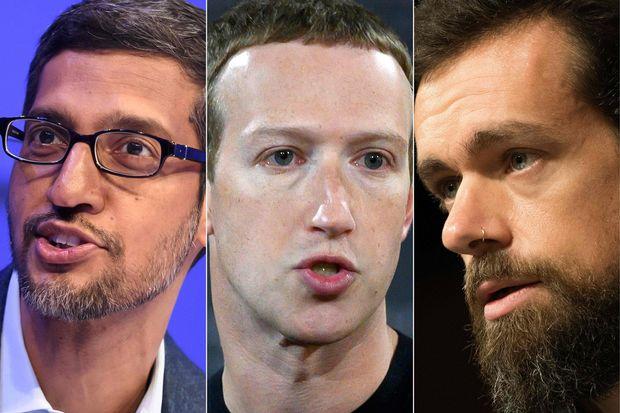
Twitter CEO Jack Dorsey, Facebook’s Mark Zuckerberg and Google’s Sundar Pichai agreed to testify remotely during a hearing of The Senate Commerce Committee after being threatened with subpoenas.
Beyond questioning the CEOs, senators will examine proposals to revise Section 230 – the long-held legal protections for online speech – an immunity that critics in both parties say enables the companies to abdicate their responsibility to moderate content, exposing their biases, which has become increasingly transparent as the Hunter Biden laptop stories are reported (and censored)
Facebook’s Mark Zuckerberg takes a more measured tone in his testimony (excerpt, emphasis ours):
…the debate about Section 230 shows that people of all political persuasions are unhappy with the status quo. People want to know that companies are taking responsibility for combatting harmful content—especially illegal activity—on their platforms. They want to know that when platforms remove content, they are doing so fairly and transparently. And they want to make sure that platforms are held accountable.
Section 230 made it possible for every major internet service to be built and ensured important values like free expression and openness were part of how platforms operate. Changing it is a significant decision. However, I believe Congress should update the law to make sure it’s working as intended. We support the ideas around transparency and industry collaboration that are being discussed in some of the current bipartisan proposals, and I look forward to a meaningful dialogue about how we might update the law to deal with the problems we face today.
At Facebook, we don’t think tech companies should be making so many decisions about these important issues alone. I believe we need a more active role for governments and regulators, which is why in March last year I called for regulation on harmful content, privacy, elections, and data portability. We stand ready to work with Congress on what regulation could look like in these areas. By updating the rules for the internet, we can preserve what’s best about it—the freedom for people to express themselves and for entrepreneurs to build new things—while also protecting society from broader harms. I would encourage this Committee and other stakeholders to make sure that any changes do not have unintended consequences that stifle expression or impede innovation.
Twitter’s Jack Dorsey is more aggressive, warning ironically that “Section 230 is the Internet’s most important law for free speech and safety. Weakening Section 230 protections will remove critical speech from the Internet.” – (excerpt, emphasis ours)
Make a one-time donation
Make a monthly donation
Make a yearly donation
Choose an amount
Or enter a custom amount
Your contribution is appreciated.
Your contribution is appreciated.
Your contribution is appreciated.
DonateDonate monthlyDonate yearly
